

How to Start Using AI for Customer Engagement: A Practical Guide for 2025
Oct. 30, 2025
946

Table of Contents
In an era where customers expect instant, personalized, and friction-free experiences, leveraging Artificial Intelligence (AI) for customer engagement is no longer optional, it’s essential. AI empowers businesses to communicate with customers in smarter ways that boost satisfaction, loyalty, and revenue.
This guide offers a practical path to begin using AI for customer engagement, supported by up-to-date statistics, real-world case studies, and visualization ideas to energize your strategy. Let us dive in...
What Is AI for Customer Engagement?
It refers to using intelligent technologies such as natural language processing, machine learning, predictive analytics, and generative AI across communication channels, chat, email, SMS, social media to interact with customers more personally and effectively. Instead of generic outreach or reactive service, AI enables proactive, tailored experiences dynamically based on customer behavior and intent.
Key Takeaways
|
Key Takeaway |
Details |
|
9 Ways to Use AI for Engagement |
Automated campaign creation; 2. AI-powered customer journey orchestration; 3. Smarter analytics; 4. Generative AI content; 5. Personalization at scale; 6. Conversational AI; 7. Chatbots as micro-apps. |
|
Practical Starting Steps |
1. Map customer journey; 2. Focus on one use case (e.g., chatbot, email); 3. Prepare and train AI with data; 4. Deploy and monitor KPIs; 5. Iterate and scale. |
|
Common Challenges |
Avoid full automation, always offer human fallback; use quality, current data; collect ongoing feedback to improve AI accuracy. |
|
Popular AI Platforms |
MoEngage, Zendesk, HubSpot CRM, Klaviyo, Salesforce MC, Freshdesk, Drift, Ada—each with different focuses and pricing models. |
|
Final Recommendation |
Start focused, measure results, expand capabilities as you gain trust. AI engagement is key for 2025 competitive advantage. |
|
CodeSuite Offer |
CodeSuite offers fast AI integration, secure cloud infrastructure, and compliance to speed fintech AI adoption. |
Why Use AI for Customer Engagement?
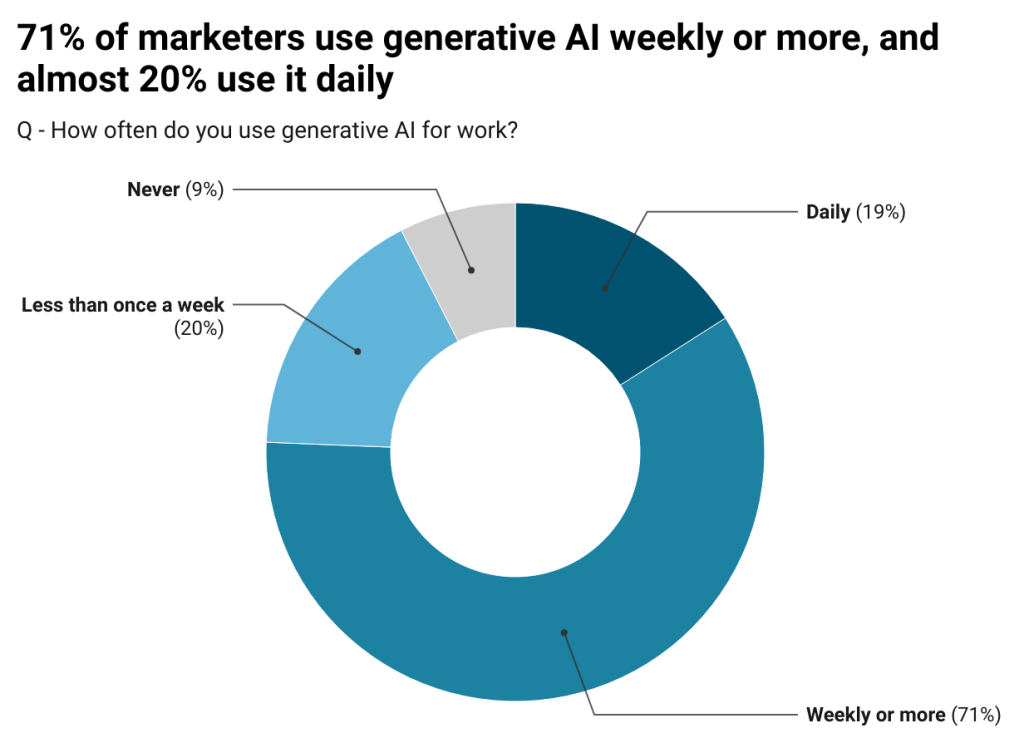
Companies that integrate AI into their engagement strategies consistently report substantial benefits: 71% of marketers say AI gives them better data-driven customer insights than before.
 9 Ways to Use AI for Customer Engagement
1. AI-Driven Campaign Creation
Crafting marketing campaigns traditionally required huge manual effort—segmenting customers, writing multiple variants of messages, choosing send times and channels. AI can automate and optimize all that. For example:
- Automatically segment customers based on behavior without manual filters.
- Generate multiple versions of personalized email and push notification copy.
- Suggest optimal sending times for each customer segment.
- Use generative AI to create fresh creative ideas and content quickly.
This streamlines campaign production and fosters experimentation with less risk.
Read more about What is Agentic AI and How Will It Reshape Your Work and Organization?
2. Customer Journey Orchestration with AI
Mapping and managing multi-step customer journeys across channels can be complex and resource-intensive. AI simplifies this by translating high-level strategies into detailed, optimized multi-channel journeys:
- Suggests touchpoints across email, SMS, app notifications, and more.
- Personalizes message timing and content based on real-time customer interactions.
- Continuously adjusts the journey to maximize engagement and conversions.
For example, an AI system can craft an automated onboarding journey for new users that adapts if they skip steps or respond positively.

3. Smarter Analytics
Instead of wading through complex dashboards, marketers can ask AI-powered tools simple questions in plain English, like "Which customer segment abandons carts most?" or "What products drive repeat purchases?"
AI curates data, detects anomalies, explains findings, and suggests next steps, enabling proactive optimization. This boosts performance across all channels.
4. Generative AI for Creative Assets
Generative AI revolutionizes content creation by producing multiple creative options within minutes—copy, subject lines, visuals, even design layouts—based on simple prompts like “Create three email variations for Black Friday.”
Marketers can rapidly test and iterate across channels, maintaining brand consistency while focusing on strategy.
5. Personalization at Scale
Personalization today is more than a name—it’s a holistic, data-driven approach. AI analyzes browsing history, past purchases, and predicted buying cycles to send timely recommendations and offers. For instance:
- Remind pet owners to reorder food when supplies run low.
- Suggest complementary products like accessories or upgrades.
- Time messages perfectly across email, SMS, and apps.
This relevance increases conversion and loyalty.
6. Conversational AI for Natural Interactions
Conversational AI understands intent and context, enabling human-like dialogues via chatbots or voice assistants across websites, apps, and messaging platforms.
It can:
- Provide order updates.
- Resolve common issues autonomously.
- Escalate complex queries smoothly.
- Suggest products based on previous orders.
Real-time, intelligent conversations lead to higher customer satisfaction.
7. AI-Powered Chatbots as Micro-Apps
Modern chatbots go beyond simple Q&A. They embed interactive capabilities into messaging platforms:
- Browse catalogs.
- Complete purchases.
- Redeem rewards.
- Receive proactive notifications.
This meets customers where they already engage daily, reducing friction and boosting sales.
Practical Steps to Start Using AI for Customer Engagement
Step 1: Understand Your Customer Journey
Map out typical customer behaviors, pain points, and engagement drop-offs across touchpoints. Data from CRM, website analytics, and support interactions help build this baseline.
Step 2: Focus AI on a Critical Use Case
Start small, whether chatbot support, personalized email campaigns, or AI-driven product recommendations. This limits risk and helps demonstrate value.
Step 3: Prepare Data and Train AI
Feed AI models with your interaction logs, purchase histories, and customer feedback. This allows AI to learn brand voice, user intents, and common scenarios.
Step 4: Deploy and Monitor KPIs
Go live with your chosen AI application, tracking metrics such as engagement rate, conversion, CSAT, and time saved for agents.
Step 5: Iterate and Scale
Use real-world results to refine AI settings, expand to other channels, or add new AI capabilities.
Common Challenges and How to Avoid Them
- Avoid complete automation; offer easy access to human help when complex issues arise.
- Use high-quality, up-to-date training data to prevent AI errors and biases.
- Collect ongoing customer and agent feedback to improve AI accuracy and relevance.
AI Customer Engagement Platforms to Explore
Several platforms offer AI-powered engagement tools with varying specializations and pricing:
|
Platform |
Focus |
Best For |
Pricing Highlights |
|
MoEngage |
AI-driven automation |
Consumer brands, multi-channel |
Free up to 10K MAUs, scalable plans |
|
Zendesk |
Support + engagement |
SMBs and enterprises unified support |
Starts at $19/agent/mo |
|
HubSpot CRM |
CRM & marketing automation |
Growing SMBs |
$45/mo+ |
|
Klaviyo |
Ecommerce & DTC |
Retail and online shops |
Free plan & pay tiers |
|
Salesforce MC |
Enterprise marketing |
Large enterprises in Salesforce ecosystem |
$25-$3250/mo depending on scale |
|
Freshdesk |
Support automation |
Customer support teams |
Free & paid plans available |
|
Drift |
Conversational marketing |
B2B sales teams |
Starting at $2500/mo |
|
Ada |
AI service automation |
Multilingual, omnichannel support |
Custom pricing |
Final Words
The key to success is starting focused, whether with chatbots, AI-powered campaigns, or analytics, and scaling as insights and trust build. Supported by compelling stats and industry-tested cases, AI customer engagement is a must-have strategy for 2025 and beyond.
Don't wait for your competitors to get ahead. Start exploring AI for customer engagement today with Codesuite dedicated team and see how it can transform your business. Remember, the best time to start was yesterday, but the second-best time is right now.
By choosing CodeSuite’s AI-driven fintech solutions, your company can provide better, personalized services. CodeSuite offers fast model integration, secure cloud-native infrastructure, and built-in compliance, so your fintech software gets live sooner and stays ahead of evolving security and regulatory challenges.
Are you ready to embrace AI?
Map your customer journey, select a use case, train your AI with real data, launch smartly, and scale confidently.